Defrost & Frost Buildup Guides
Diagnose excessive frost accumulation, failed defrost heaters, bad bimetal thermostats, and frozen evaporator coils with our technician-approved guides.
Defrost System Diagnostics in Stonecrest, GA
When your refrigerator’s automatic defrost cycle fails, frost rapidly blankets the evaporator coils, choking off cold airflow to the fresh food compartment. Our technicians accurately pinpoint faulty heaters, defective bi-metal thermostats, and failing control boards before spoiled food and compressor strain turn into costly replacements.
Common Signs of a Defrost Failure:
Freezer back wall covered in thick frost, refrigerator compartment warming above 40°F, or continuous humming with zero cooling.
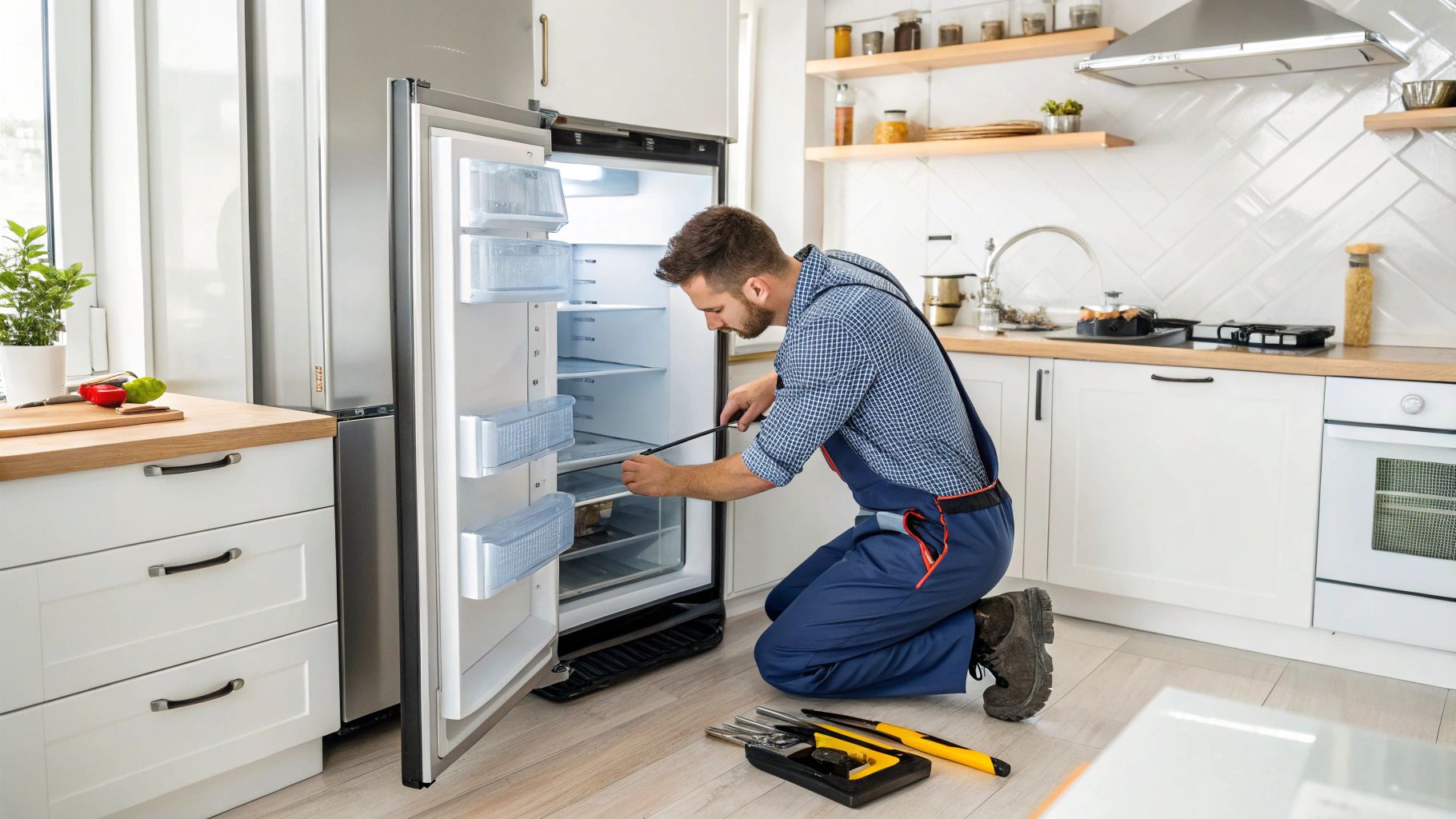
Fast Stonecrest Diagnostic Protocol
Full Refrigerator Defrost System Inspection
Our Multi-Point Defrost Inspection Covers:
Defrost Heater & Element Testing
We check the heating coil for electrical continuity and burnouts that stop automatic frost clearing.
Bi-Metal Thermostat Verification
Testing temperature sensors that signal when heating elements should activate and terminate safely.
Defrost Timer & Control Diagnostics
Inspecting electronic control boards and mechanical timers that regulate daily defrost intervals.
Drain Line & Evaporator Coil Check
Clearing frozen condensate lines and restoring proper airflow across the cooling fins.
4 Core Defrost System Checkpoints
Always disconnect power before testing internal components. Follow checkpoints sequentially to locate circuit or mechanical failures.
Check the Defrost Timer & Control Board
Key Testing Action:
- Locate the manual advance screw on mechanical timers and turn clockwise until it clicks into defrost mode.
- Observe if the compressor shuts off and the heating element activates within 3 to 5 minutes.
- On digital models, check electronic board diagnostic mode for error codes indicating defrost cycle failures.
Test the Defrost Heater Element
Key Testing Action:
- Disconnect refrigerator power before accessing the back freezer panel.
- Unplug heater leads and test for electrical continuity using a calibrated multimeter.
- Replace the heater assembly if there is infinite resistance (open circuit) or visible glass/calrod damage.
Inspect the Defrost Bi-Metal Thermostat
Key Testing Action:
- Inspect the bi-metal sensor for bulging, oil leakage, or physical distortion on its casing.
- Test continuity while the sensor is at sub-freezing temperatures (closed circuit when cold).
- Verify solid wire harness clip connections to prevent intermittent circuit drops.
Clear and Inspect the Defrost Drain Line
Key Testing Action:
- Inspect the drain funnel beneath the evaporator coil for solid ice blockages.
- Flush line with hot water and mild disinfectant using a bulb syringe or flexible tubing.
- Verify the rubber duckbill valve at the bottom rear is clear and pliable.
Defrost Cycle & Frost Accumulation FAQ
Clear answers to the most frequent defrosting, temperature consistency, and heating element questions.
Defrost System Diagnostics FAQs
What does the defrost system actually do?
It melts frost off the evaporator coil on a schedule. Because frost blocks airflow, the system must clear it regularly. Therefore when defrost fails, cooling drops even though the compressor still runs.
What are the signs of a defrost fault?
Several signs repeat. First, ice builds on the rear panel. Second, the fridge warms while the freezer stays cold. Third, you hear the fan striking ice. Because these point the same way, diagnosis is usually quick.
Which part normally fails?
Usually one of three. First, the defrost heater opens. Second, the defrost thermostat fails. Third, the timer or control board stops triggering the cycle. Therefore each is tested in turn.
Can I just melt the ice myself?
You can, and the unit will cool again briefly. However, because the underlying fault remains, the ice returns within days. Therefore manual defrosting is a delay rather than a repair.
How long does defrost repair take?
Most are completed in one visit, because we stock the common heaters and thermostats. However, a control board may need ordering. Either way, you get the timeline up front.
Will a defrost fault spoil my food?
It can, because the fridge gradually warms as airflow drops. Therefore if the compartment is above 40°F, treat it as urgent and move perishables.
Where do I find my model number?
Usually the tag sits inside the fresh-food compartment. First, check the left wall near the crisper drawers. However, sometimes it hides behind a drawer instead. Because the number identifies the exact parts, we always ask for it first.
How long will the repair take?
Most visits finish the same day, because we stock the parts that fail most often. However, if your model needs an ordered part, then we return once it arrives. Either way, you get the timeline before we start.
Will you quote before doing the work?
Yes. First the technician inspects the unit. Then you get a clear price before anything is repaired. Because nobody likes surprises, no work begins until you approve that quote.
How often should I clean the condenser coils?
Clean them about twice a year. However, if you have pets, then clean them more often. Since dust makes the compressor work harder, regular cleaning lowers running costs. In addition, it extends the life of the unit.
What temperature should I set?
Set the fridge near 37°F and the freezer at 0°F. However, do not rely on the display alone. Instead, place a thermometer in a glass of water. Because water reacts slowly, it shows the true shelf temperature.
How fast can you get here?
Usually we can come the same day. Because our technicians are EPA Section 608 certified, they can handle sealed-system work too. So call (470) 847-9076 with your model number, and we will give you an arrival window.