Ice Machine Repair in Stonecrest, GA
Get fast, dependable local ice machine repair for commercial kitchens, bars, and residential units. We diagnose frozen harvest lines, low ice production, water inlet valve failures, and faulty compressors with genuine replacement parts and same-day Stonecrest dispatch.
- Commercial Cube & Flake Units
- Undercounter Ice Machines
- Built-In Residential Ice Makers
- Dispenser & Bin Combinations
- Freestanding High-Capacity Units
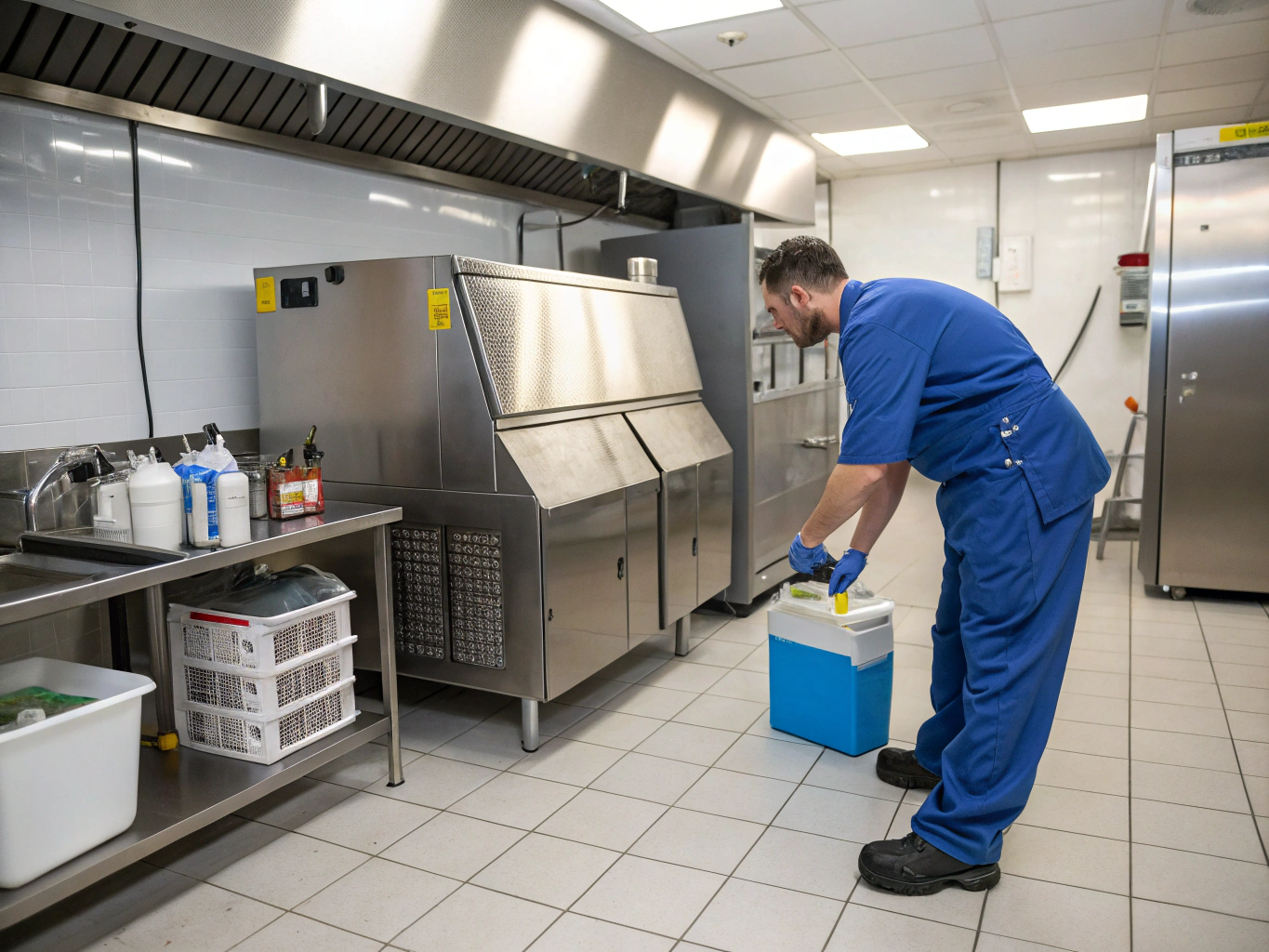
Water Lines & Evaporators
Pumps, harvest cycles, sensors
Book Your Ice Machine Service
A malfunctioning ice maker can stall drinks, kitchen service, and daily bar operations. Our technicians troubleshoot compressor issues, water line blockages, freezing mechanisms, and bin sensor faults on all major brands.
Ice machine specialists
Commercial & hospitality technician coverage across Stonecrest.
Quick turnaround service
Same-day emergency response to keep your food & beverage service running.
Hospitality & food service ready
Supporting restaurants, bars, hotels, cafeterias, and venues.
Urgent Hospitality Dispatch
470-847-9076Request Refrigerator Service
Ice Machine Repair Solutions & When to Call a Professional
Reliable ice production is essential for foodservice, hospitality, and healthcare. Review practical fixes, understand diagnostic warning signs, and read direct answers from Stonecrest technicians.
Proven Repair & Maintenance Procedures
Standard technical steps to resolve low ice production, hollow cubes, and harvest faults.
Water Inlet Valve & Line Descaling
Target Result: Restores normal water fill rate and prevents undersized, hollow ice cubes.
Evaporator Plate & Harvest Cycle Calibration
Target Result: Ensures uniform ice slabs release smoothly without freezing up or error pausing.
Condenser Coil & Fan Motor Servicing
Target Result: Lowers compressor operating temperature and restores rated hourly ice yield.
Bin Thermostat & Optical Sensor Alignment
Target Result: Prevents ice overflow and stops premature shutoffs when the bin is empty.
When to Immediately Call a Professional Refrigerator Technician
Attempting unauthorized electrical or sealed-system repairs on commercial ice makers can void manufacturer warranties and risk refrigerant violations. Call our Stonecrest crew right away if you detect these indicators:
Refrigerant Leaks & Pressure Drops
Hissing sounds, partial frost pattern across evaporator coils, or warm discharge air require EPA-certified recovery and sealed-system repair.
Repeated Compressor Clicking or Overheating
If the compressor starts and shuts down within seconds on thermal overload, immediate electrical diagnostic checks are needed.
Contaminated or Discolored Ice Output
Black flecks, cloudy odor, or biological slime necessitate deep chemical sanitization and commercial filtration overhaul.
Total Harvest Freeze-Ups
Ice sheets freezing solid without dropping down the chute can warp evaporator plates and destroy harvest heating components.
Need emergency ice machine restoration in Stonecrest?
Local prompt response for restaurants, hotels, and retail stores.
Clear Answers to Common Ice Machine Inquiries
Find answers to recurring operational issues, maintenance intervals, and cost-efficient troubleshooting for Stonecrest businesses and residences.
Have a specific error code?
Our technicians handle Scotsman, Manitowoc, Hoshizaki, Ice-O-Matic, and true ice systems throughout Georgia.
Speak with a TechnicianExplore Related Commercial Refrigeration Services
Connected troubleshooting guides and repair hubs for Stonecrest business owners.
Commercial Refrigeration Hub
Full service diagnostic and maintenance options across DeKalb County.
Restaurant Refrigeration Repair
Walk-in coolers, prep tables, reach-in freezers, and beverage chillers.
Grocery Store Refrigeration
Display cases, deli counters, multi-deck chillers, and walk-in freezers.
Ice Machine Troubleshooting Guide
Resolve common ice maker failures fast. Follow our technician-verified diagnostic steps to distinguish quick DIY checks from issues requiring professional repair.
Not Making Ice
Observed Symptoms
The ice maker has stopped cycling completely; no new cubes drop into the storage bin.
Need Fast Local Repair?
Stonecrest, GA same-day service
Our experienced technicians carry genuine OEM valves, fill tubes, and control modules on every truck.
Step-by-Step Diagnostic Check
Follow these safety checks in order before disassembling any components.
Check the Control Arm & Switch
Ensure the mechanical feeler arm is down. If your unit has a digital toggle switch, toggle it off for 30 seconds and switch back on.
Inspect Freezer Temperature
Ice makers require freezer temperature to be between 0°F and 5°F (-18°C to -15°C). Above 10°F, the internal thermostat will not trigger the mold harvest cycle.
Examine Fill Tube & Water Valve
A technician tests the dual-port water inlet valve for 120V signal and clears any ice plug from the water feed spout behind the unit.
Frequently Asked Questions
Specific Refrigerator Problem Guides
In-depth troubleshooting manuals from our 50-problem knowledge library.
Still unable to get ice from your refrigerator?
Stonecrest Refrigerator Repair technicians provide quick diagnostics, genuine factory parts, and dependable repairs across Dekalb County.
Commercial Ice Machine Repair
What are the most common ice machine problems?
Ice machines fail most often through scale buildup, water supply restrictions, dirty condensers, and worn water pumps. Because scale forms continuously in hard water, cleaning intervals matter more than almost anything else.
Why has my ice machine stopped producing?
Production stops when water cannot enter, when the evaporator cannot reach temperature, or when the harvest cycle fails to release the slab. Therefore, the first check is whether water reaches the sump at all.
Why is the ice cloudy or soft?
Cloudy ice usually indicates mineral content or a shortened freeze cycle. Specifically, scale on the evaporator slows heat transfer and produces soft, fast-melting cubes.
How often should an ice machine be cleaned?
Most manufacturers specify a full descale and sanitise every six months. However, hard water or heavy use often calls for quarterly service.
Water and Scale
How does scale affect performance?
Scale coats the evaporator and insulates it, so each batch takes longer and weighs less. Consequently, output falls steadily while energy use climbs.
Does a water filter help?
Filtration reduces sediment and scale-forming minerals considerably. Even so, filters need changing on schedule or they restrict flow instead.
What causes a low water level alarm?
A closed shut-off, a blocked inlet screen, or a failed float switch each starve the sump. Afterwards, the control halts production to protect the pump.
Can the drain cause problems?
A blocked drain backs warm water into the sump and prevents proper freezing. In that case, cycles lengthen and ice quality declines.
Refrigeration Faults
What does a dirty condenser do?
A clogged condenser raises head pressure so the machine cannot complete a freeze cycle efficiently. As a result, production drops sharply on hot days.
How do I know the harvest cycle has failed?
A slab that stays frozen to the evaporator indicates a harvest problem rather than a freezing problem. Specifically, the hot gas valve or the harvest thermostat is usually responsible.
Is low refrigerant possible?
A low charge produces long cycles and thin, partially formed ice. Therefore, a leak search precedes any recharge.
Service
How quickly can you service a commercial ice machine?
Stonecrest Refrigerator Repair schedules same-day appointments across Stonecrest and the surrounding communities whenever openings remain. To book one, call (470) 847-9076 and describe what the unit is doing.
Are your technicians certified for refrigerant work?
Yes, because our technicians hold EPA Section 608 certification for refrigerant handling. Therefore, any diagnosis that reaches the sealed system follows federal requirements.
Before You Call
Should I unplug the refrigerator first?
If the unit trips a breaker or smells hot, then unplug it right away. Otherwise, leave it running so the technician can watch the fault as it happens.
How long does food stay safe?
Because a closed refrigerator holds temperature for roughly four hours, you have a short window to act. Meanwhile, a full freezer keeps food frozen for up to forty-eight hours provided the door stays shut.
Does the model number really matter?
Since parts vary between model years, the full model number often saves a return trip. In addition, the serial number tells us the build date, which further narrows the likely fault.
Can I try anything before calling?
First, check the breaker, the outlet, and the temperature settings. Then clear the vents and confirm the doors close fully, because those four checks solve a surprising share of complaints.
What if the problem comes and goes?
Although intermittent faults are harder to catch, a written note of when it happens helps enormously. For instance, a fault that appears roughly every eight hours usually points straight at the defrost cycle.
Costs, Timing and What to Expect
How soon can you usually get here?
Because we hold slots open each day for urgent calls, most customers get a same-day or next-day visit. However, availability shifts through the day, so calling early gives you the best choice.
Do you work weekends?
Yes, although weekend slots fill faster than weekday ones. Therefore, booking ahead gives you the widest range of times.
Will you tell me the cost before starting?
After the diagnosis, the technician explains what the repair needs and what it costs. Then you decide whether to go ahead, so nothing happens without your agreement.
What if the repair does not make sense?
If the cost approaches the value of the appliance, then we say so plainly. In that case, you can put the money toward a replacement instead.
Do you service commercial as well as home appliances?
Besides household refrigerators, we handle light commercial units in kitchens and small businesses. Meanwhile, larger walk-in systems follow a different service path, so mention the equipment when you call.
Running an Ice Machine Day to Day
How much ice should my machine make each day?
Because rated output assumes cool incoming water and a cool room, real production usually falls below the badge figure. Therefore, comparing today's output against last summer tells you more than the specification does.
Why does output drop in summer?
Since both the room and the supply water run warmer, each freeze cycle takes longer. Consequently, a machine that kept up in March may fall short in August.
Does water temperature really matter?
Warm incoming water adds minutes to every cycle, so daily output falls noticeably. In addition, warm water carries more dissolved mineral, which speeds up scaling.
How do I know when a clean is overdue?
If cubes come out small, cloudy, or stuck together, then scale has already built on the evaporator. Moreover, a sour smell in the bin points to biofilm rather than mineral.
Can I keep using it while it is scaled?
Running a scaled machine works for a while, although output and cube quality keep falling. Meanwhile, the compressor runs longer for less ice, which raises both wear and energy cost.
What causes ice to taste odd?
Although most taste complaints trace to the water supply, biofilm inside the sump contributes just as often. For that reason, a full sanitise usually clears the problem.
Should I shut the machine down overnight?
Most operators leave machines running, since restarting from warm wastes a full cycle. However, a planned shutdown makes sense before a long closure.
How long do ice machines last?
With regular descaling, commercial machines commonly run well beyond ten years. In contrast, a neglected machine often fails within half that time.
Does filtration pay for itself?
Filters cut scale and sediment, so cleaning intervals stretch and parts last longer. As a result, the filter cost usually comes back in reduced service calls.
What should I do if production stops completely?
First, check the water supply, the bin level sensor, and the breaker. Then call us, because a machine left off during service hours costs far more than the repair itself.
Working With Our Technicians
How do I prepare for the technician visit?
Clear a path to the appliance and move perishable food aside, because the technician often needs to pull the unit away from the wall. In addition, keep pets in another room while the work goes on.
Do you explain the problem before starting work?
Yes, the technician walks you through the fault and the realistic options first. Therefore, you decide how to proceed before anyone picks up a tool.
Can you work on built-in and counter-depth models?
Our technicians handle built-in, counter-depth, French door, side-by-side, and top-freezer layouts every week. However, built-in units sometimes need extra clearance, so mention the model when you call.
What if the same fault returns?
Call us and we will come back to look at it again. Moreover, we keep notes on every visit, so the technician arrives already knowing what happened last time.
Do you carry common parts on the van?
Our technicians stock the parts that fail most often, such as fans, relays, thermostats, and gaskets. Consequently, many repairs finish during the first visit rather than waiting on an order.
Keeping a Refrigerator Reliable
How often should I clean the condenser coils?
Because dust on the coils acts like a blanket, most homes benefit from a cleaning twice a year. However, households with pets usually need it every three months.
Does the temperature setting affect reliability?
Running colder than necessary adds hours of compressor time every week. Therefore, thirty-seven degrees for fresh food and zero for the freezer suits almost every household.
Should I leave space around the refrigerator?
Since the appliance rejects heat from the back and the top, manufacturers specify a clearance gap. Otherwise, the unit recirculates its own warm air and works far harder than it should.
How do I look after the door seals?
Wipe the gasket with warm soapy water every month, because crumbs and sticky residue hold the seal open. Afterwards, check that it still grips a sheet of paper all the way around.
Is a full refrigerator better than an empty one?
A reasonably full cabinet holds temperature better, since stored food acts as thermal mass. Even so, packing shelves against the vents blocks airflow and creates warm spots.
What maintenance does an ice maker need?
Change the water filter on schedule and empty the bin occasionally if you use little ice. Otherwise, old cubes bond together and the mould eventually ices over.
Does a surge protector help?
Control boards fail during storms far more often than compressors do, so a surge protector is cheap insurance. In addition, it protects the display and dispenser electronics.
When should I call rather than wait?
Call as soon as temperatures drift, ice builds, or the compressor stops cycling normally. Because small faults rarely stay small, early attention usually costs less.
Timing, Parts and Access
How long do most repairs take?
Because the technician diagnoses first and then works, most visits run between one and two hours. However, a part that has to be ordered naturally extends that timeline.
What if a part has to be ordered?
If the part is not already on the van, then we order it and book a return slot. Meanwhile, we explain whether the appliance remains safe to keep using.
Do you work on all door styles?
Whether the unit is a French door, a side-by-side, or a top-freezer, the same diagnostic approach applies. In addition, built-in models follow the same principles with tighter access.
Does the refrigerator need to be moved?
Since most faults sit at the back of the cabinet, the technician usually needs to pull the unit forward. Therefore, clearing the area beforehand saves everyone time.
Do older appliances still have parts available?
Although very old models can be harder to source, common components stay available for years. For instance, fans, thermostats, relays, and gaskets are rarely a problem.
What happens if the fault cannot be fixed economically?
If the repair no longer makes financial sense, then we say so plainly rather than pushing ahead. In that case, you can put the money toward a replacement instead.
Costs, Energy and Replacement Decisions
How do I decide between repair and replacement?
Because most repairs cost a fraction of a new appliance, repair usually wins on units under ten years old. However, once a sealed-system failure meets an ageing cabinet, replacement starts to make more sense.
Does a failing refrigerator use more power?
Since the compressor runs longer to make up for lost efficiency, energy use climbs well before cooling fails outright. In fact, a dirty condenser alone can add noticeably to a monthly bill.
Are newer models always cheaper to run?
Although modern units look more efficient on paper, a well-maintained older refrigerator often performs respectably. Therefore, condition matters as much as the model year.
Why do faults appear in summer?
Because warm, humid air loads the system harder, marginal components fail first in hot weather. Meanwhile, the same part may run quietly all winter without complaint.
Is it worth repairing a garage refrigerator?
If the unit carries a garage-ready rating, then repair usually pays off. Otherwise, a standard refrigerator in an unconditioned space will keep struggling whatever you fix.
Does a warranty cover the repair?
While manufacturer coverage may still apply on newer appliances, labour often ends long before parts coverage does. For that reason, checking the paperwork before booking is worthwhile.
Can poor installation cause faults?
Since clearance, levelling, and water connections all affect performance, a rushed installation shows up as problems later. In addition, a crushed water line is a common and easily missed cause.
What should I expect after the repair?
After a repair, temperatures usually settle within four to six hours. Meanwhile, keep the doors closed so the system can catch up properly.
Getting the Most From Your Service Call
How do I describe the fault clearly on the phone?
Because small details narrow the diagnosis quickly, mention which compartment is affected and when the problem began. In addition, note any sounds, since a click, a hum, or silence each point somewhere different.
Should I take a photo before calling?
If ice, water, or an error code is visible, then a photo helps enormously. Moreover, the model tag photo saves you reading a long number aloud.
Does the age of the appliance change the approach?
Since older units use simpler controls, diagnosis often moves faster on them. However, newer models store fault codes that can point straight at the failed part.
Can I keep food in the unit during the visit?
Although most repairs allow food to stay put, sealed-system work takes longer and warms the cabinet. Therefore, a cooler on standby is sensible for those jobs.
Will the technician need water or power shut off?
If the repair touches the ice maker or dispenser, then the supply valve gets closed first. Meanwhile, electrical work naturally begins with the appliance unplugged.
How do I avoid the same fault later?
Because most repeat failures trace back to airflow and seals, regular coil cleaning prevents a great deal. Furthermore, replacing a tired gasket early protects the compressor from constant running.
What if more than one thing is wrong?
When several faults appear together, the technician explains which one matters most and what each costs. Then you decide whether to tackle them in one visit or stage them.
Do you follow up after a repair?
After the visit, we note what was done so any later call starts with full history. In short, you never have to explain the same story twice.